 MB Medic Mercedes-Benz Repair Guides, Service, How To DIY

Last updated:
In this guide (9 sections)
Mercedes-Benz Common Problems
Have you ever wondered what are some of the most common problems with Mercedes-Benz cars? In this article, we will go over some of the problems that we see the most in Mercedes-Benz models such: as E, C, S, ML, SLK, CLK, CLS, GL, and G Class.
List of the most common Mercedes-Benz problems.
1. Rust

One of the main challenges with Mercedes-Benz cars is rust. We still remember an older Mercedes-Benz 240D that had over 1 million miles still running strong but the floor had rusted out, and you can see the ground when sitting in the driver seat. The newer Mercedes-Benz models still have rust issues as well. Get a flashlight and carefully inspect the car. Look under the wheel wells and near the bumpers. Check the front fenders and the rear quarter panels. Once rust develops it is very expensive to repair. You should avoid cars that have rust.
One place that you should always check for rust is behind the license plate. Remove the license plate and inspect.
Check for rust at the bottom of the doors. This is another spot where you may notice rust problems.

2. Engine Mounts

Engine mounts on Mercedes-Benz cars are oil filled. Their main purpose is to keep the engine vibrations from being transmitted to the cabin. Because they are oil filled, around 100,000 miles, they start to fail and lose the oil. When the engine mounts fail you may notice excessive vibration on the seat, in the cabin, and even on the steering wheel. The price of the engine mounts is reasonable when you buy the parts online. Replacing the motor mounts can take between 4 and 6 hours of labor.

3. Suspension & Steering Components

Ball joints, sway bar link,control arm bushings on used Mercedes-Benz wear out much sooner than you would expect. This is based on our experience with used Mercedes-Benz. If you take a Mercedes-Benz for state inspection, it is very likely to fail due to suspension issues, especially if the car has over 100k miles.

4. Window Regulators

Window regulators do the hard work when you press the button to lower or close the windows. They do tend to fail more on Mercedes-Benz ML-Class and C-Class based on our experience. Window regulators don’t fail on Mercedes-Benz cars only. They are a common problem on BMW, Lexus, and Audi. Window regulators can easily be replaced. This is a DIY type of job if you have the patience. If you have a mechanic at your local auto repair shop, change the window regulator, expect to pay between $350 to $500 and even more at your authorized Mercedes-Benz dealership.
5. AirMatic Components

AIRMATIC, the air suspension system most owners mean when they talk about this, arrived on the S-Class W220 and then the E-Class W211. Air suspension itself is far older at Mercedes than that: the W112 300SE of 1961 already came with pneumatic self leveling suspension as standard equipment, so this is a feature the company has been building for over sixty years rather than a recent experiment. The airmatic bags replace the struts and shocks on your Mercedes-Benz. While it was an excellent feature added to some Mercedes-Benz models, it was also prone to failure. In the early days, replacement parts were very expensive, but aftermarket parts are now readily available and at reasonable prices. Not all Mercedes-Benz cars are equipped with air suspension, so this doesn’t apply to all MB models. If you are looking at a used car with air suspension, there is one check worth more than anything you can learn on a test drive, and it costs nothing. Look at the car after it has sat overnight, or at least for several hours, before it is started. A healthy system holds its height while parked. A car that is sitting low at one corner, or squatting at the back, has a leak somewhere in that corner, and a compressor that runs for a long time on start up to bring the car back up is doing so because it has been losing air all night. A seller who has the car running and warmed up when you arrive has, intentionally or not, hidden exactly that. Ask to see it cold.
Air suspension components that fail the most are:
| Suspension Air Compressor And Relay |
| Air Suspension Strut / Bag |
6. Catalytic Converters
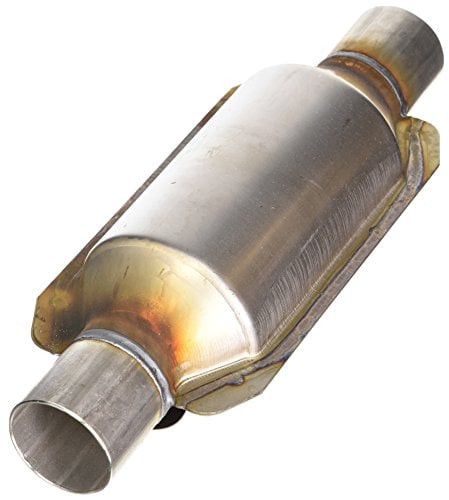 Catalytic converters are prone to failure. We have seen a few Mercedes-Benzes needing new catalytic converters at 60,000 miles. As the catalytic converter may become less effective or clogged, the oxygen sensors may trigger the check engine or service engine light. As the catalytic converter’s condition worsens, you may also notice performance issues, misfires, and hesitation. Replacing the catalytic converter can be very expensive. Depending on the Mercedes-Benz model, you may get quotes as high as $4000. If that is out of your budget, the alternative would be to install Universal Catalytic Converter. It costs a lot less but you will need an exhaust/muffler shop to weld it in place.
7. Transmission Problems

The 5-speed automatic transmission is a very well-built and robust transmission. But a chain is only as strong as its weakest link, and that philosophy applies to Mercedes-Benz transmission. While the transmission in itself is bulletproof the13-pin connector and the valve body issues have caused a fair reputation damage to Mercedes-Benz. The good thing is that these repairs are relatively inexpensive and can be completed without removing the transmission.
8. Check Engine Light

A common problem is the check engine light coming on due to the gas cap not being tight enough. Next time you fill up your car with gas, tighten the gas cap, or the service engine light may come on. If the check engine light comes on for other reasons, you can use an OBD II scanner to read and erase the engine fault codes on your Mercedes-Benz. The video below shows you how to read and erase the fault Check Engine Fault Codes using one of the best scanners, the YOUCANIC Full System Scanner.
Before you buy parts, scan every control module, not just the engine. It shows the root fault behind the warning lights and tells you whether the problem is still active. See how to do a full health check.


Engine warning light on so garage found power booster fault … fitted new sensor but light still on . Help please
I have a 2011 300c class. I’m having trouble with my rear driver side door. I have no power to it. Window, lock, and lights don’t work. What can I do to check and fix.
I have a 1999 mercedes ml430 and have been experiencing a whining noise. I had it checked out and mechanic stated that the noise is coming from the power steering pump. I had the pump replaced and the noise continues. I then saw researched and found this article that claims that sometimes if Lubrizol is used in the power steering this helps to tame or eliminate the noise. Have you any opinion on this additive
Not sure what the problem is on your case. We had a M112 engine one time that we thought the power steering pump was the problem and replaced it. The noise was still there. It was the A/C compressor clutch. You can bypass the compressor pulley to verify.
I have aC300 MB the phone will not download my contacts. I have tried all resources.
Help
Try a different phone and see if downloading the contacts works. The issue may be compatibility with your phone. It may work to receive calls but not to download contacts.
red SRS airbag light is on. did not pass inspection. how do i resolve this?
You need a scanner that can read the airbag control unit. You will get a fault code that tells you why the light is on. The UCAN-II Pro reads and clears airbag and SRS codes on Mercedes-Benz. Then you have to go from there. If the SRS light is on because your battery was low or dead in the past, then you can just erase the fault codes and the light will turn off. Otherwise get the codes and do some more research.
If you need more help, there is a detailed article here that explains how to troubleshoot srs light.
I have a C class W202 1995 model .Anytime I buy gas ( PMS as we call it in Sun Sahara Africa) it will be gushing out in the process of filling the tank .