 MB Medic Mercedes-Benz Repair Guides, Service, How To DIY
Common Problems, DTC Codes, Repair Costs, Torque Specs & the 5 Best OBD2 Scanners
Mercedes-Benz • Sprinter • Freightliner • Jeep • Chrysler Diesel Vehicles
By Shawn Muller Mercedes-Benz Diesel Specialist
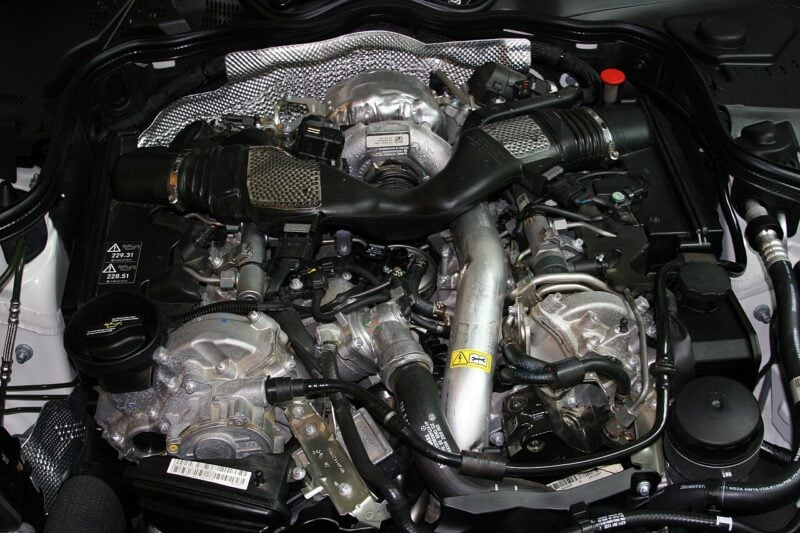
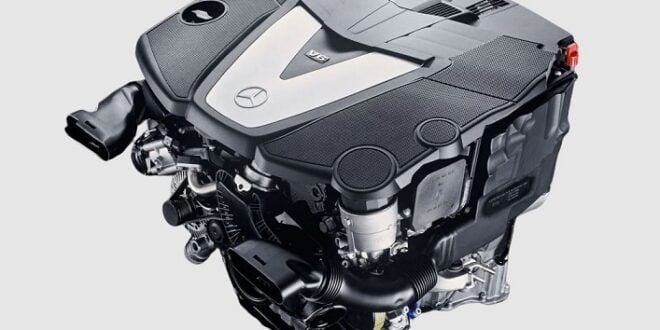
Figure 1: OM642 3.0L V6 turbo-diesel engine — top-down view showing V-bank valley, turbo, and intake manifold
Introduction: Why the OM642 Matters
After 20 years of wrenching on Mercedes diesel engines, I can say that the OM642 3.0 liter V6 turbo diesel is one of the consequential engines in modern Mercedes. It debuted in 2005 and produced through 2022, this engine found its way under the hood of barely every Mercedes mode, from the W211 E class to the W906 and the 2nd generation VS30 Sprinter vans, and even to unlikely non Mercedes models from Chrysler, Dodge, Jeep, and Freightliner.
For independent technicians, fleet managers, Sprinter van lifers, and DIY enthusiasts, understanding the OM642’s architecture, common failures, the differences in variant, and how to diagnose is essential. This guide provides an extensive technical breakdown, like common problems with DTC codes, estimated repair costs, torque specifications, OEM part numbers, a pre-purchase inspection checklist, and a detailed analysis of the five best diagnostic scanners available today.
OM642 Engine: Full Technical Specifications
The OM642 is a 2,987 cc (3.0L) aluminum-block, aluminum-head, 72-degree V6 turbo-diesel featuring Bosch common rail direct injection, a variable-geometry turbocharger (VGT/VNT), and a counter-rotating balance shaft. Crankshaft pins are offset 48 degrees for even 120-degree firing intervals.
| Specification | Details |
| Engine Code | OM642 (DE30LA / DE30LA red. / LSDE30LA) |
| Displacement | 2,987 cc (3.0 liters) |
| Configuration | 72° V6 with counter-rotating balance shaft |
| Block / Heads | Aluminum (cast-in grey iron liners; Nanoslide post-2014) |
| Compression Ratio | 18.0:1 |
| Fuel System | Bosch CP3/CP4 common rail, up to 1,600 bar (23,200 PSI) |
| Turbocharger | Single Garrett VNT/VGT variable-geometry |
| Valvetrain | DOHC, 4 valves/cyl (24 total), chain-driven |
| Firing Order | 1-4-3-6-2-5 (120° even intervals) |
| Power Output | 190–265 HP (application dependent) |
| Torque Output | 398–457 lb-ft (540–620 Nm) |
| Oil Capacity | ~9.0 L (9.5 qt) with filter |
| Oil Spec | MB 229.51 / 229.52 (synthetic low-SAPS) |
| Coolant Capacity | ~10.5 L (11.1 qt) total system |
| Emissions (early) | DPF + EGR + NOx storage catalyst (2005–2009) |
| Emissions (BlueTEC) | DPF + EGR + SCR / AdBlue (2010+) |
| Production Years | 2005–2022 |
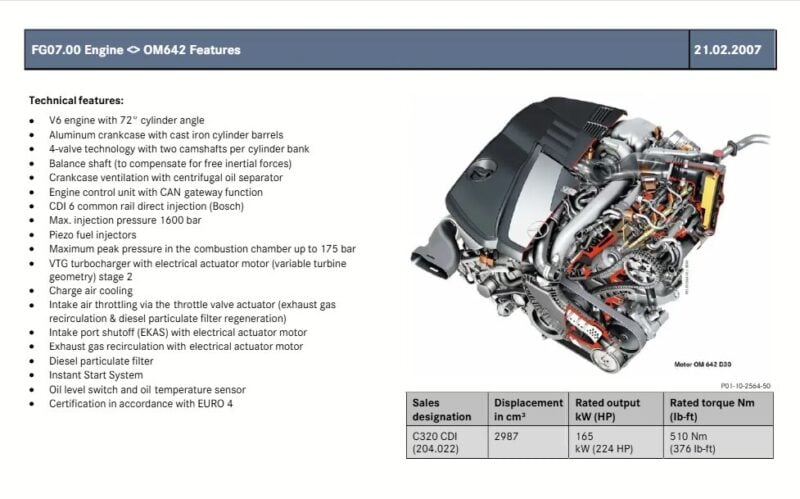
Figure 2: OM642 engine cutaway diagram showing V-bank angle, balance shaft, common rail, and turbo location
Vehicle Applications
Mercedes-Benz Passenger Cars & SUVs
E-Class (W211 E320 CDI, W212 E350 BlueTEC), S-Class (W221 S320/S350), C-Class (W204 C320/C350 CDI), CLS-Class (W219/W218), CLK 320 CDI, R-Class (W251 R320/R350), G-Class (W461/W463), ML-Class (W164/W166 ML320/ML350), GL-Class (X164/X166), GLK 350 CDI, GLC 350d, GLE 350d, GLS 350d.
Sprinter Vans & Freightliner (W906 / VS30)
The most commercially significant OM642 usage. W906-generation (2007–2018) launched with 154 HP non-BlueTEC using EGR-only, later upgraded to 188 HP BlueTEC (2010+) replacing EGR with SCR/AdBlue. VS30-generation (2019+) continued with OM642 in some markets. Sold as Mercedes-Benz, Dodge (2007–2009), and Freightliner Sprinter. Used by delivery fleets, emergency services, contractors, and the camper van industry.
Chrysler / Jeep / Dodge
Jeep Grand Cherokee WK/WH CRD (2005–2010), Jeep Commander XK/XH CRD (2006–2010), Chrysler 300C CRD (2006–2011 Europe/Australia). These require Mercedes compatible diagnostic tools for the OM642 drivetrain. Jeep-only scanner will not access the diesel ECU, DPF, or emissions modules.
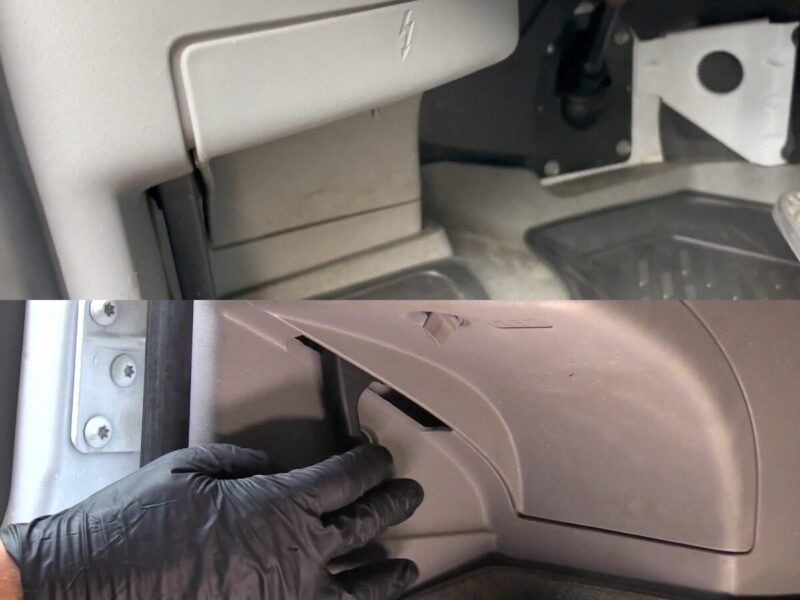
Figure 3: Sprinter W906 van showing OBD2 port location (lower left dash) and engine bay access
Which OM642 Do You Have? Variant & Year Breakdown
Not all OM642 engines are identical. Mercedes produced several variants over the engine’s 17 year production run, each with different emissions systems, power output, and weak points. Identifying which variant you have is the first step to understanding what problems to watch for.
| Variant | Years | Power | Emissions | AdBlue? | Key Diff. | Bearing Fix? |
| OM642.920 | 2005–2009 | 211–224 HP | DPF+EGR | No | Black top | No—at risk |
| OM642.940 | 2005–2009 | 190 HP | DPF+EGR | No | Sprinter det. | No—at risk |
| OM642.822 | 2007–2012 | 211 HP | DPF+EGR | No | E/ML/GL | Partial |
| OM642.826 | 2009–2012 | 190–211 HP | BlueTEC SCR | Yes | First BlueTEC | Revised |
| OM642.896 | 2010–2018 | 188 HP | BlueTEC SCR | Yes | Sprinter BT | Yes—fixed |
| OM642.898 | 2012–2018 | 240–265 HP | BlueTEC SCR | Yes | Red top/AMG | Yes—fixed |
| OM642.858 | 2014–2022 | 258 HP | BlueTEC SCR | Yes | Nanoslide | Yes—fixed |
Key Variant Differences
- Pre-BlueTEC (2005–2009): EGR-only emissions, no AdBlue/DEF or SCR. No NOx sensor codes or 10-start countdown. Most vulnerable to 1st main bearing wear and oil cooler seal failure. Highest-risk years for used purchase.
- BlueTEC SCR (2010+): Added AdBlue/SCR system. Eliminated worst EGR fouling but introduced NOx sensor failures, DEF quality faults, 10-start immobilization, and need for SCR-capable scanners. Cleaner running but more complex emissions diagnostics.
- Red-Top / High-Output (2012+): Uprated to 240–265 HP. Higher injection pressures and revised turbo mapping. More demanding on fuel system components.
- Nanoslide (2014+): Plasma-sprayed cylinder liners replacing cast-iron. Reduced friction, better oil consumption, improved longevity. Most refined OM642 variant.

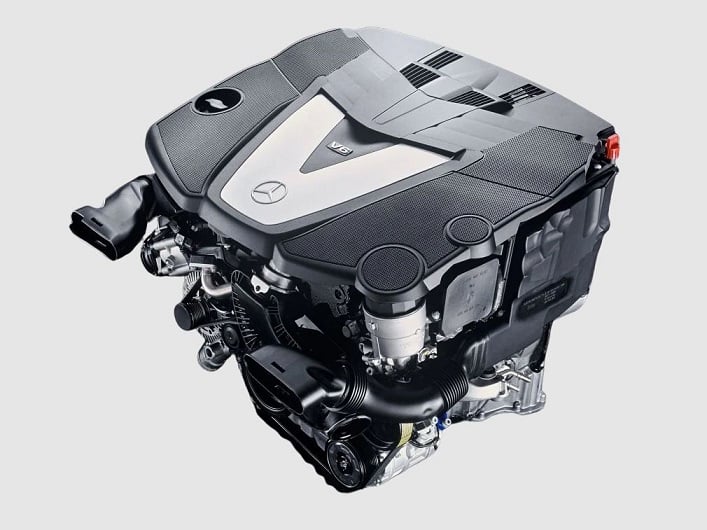
Figure 4: Side-by-side: OM642 black-top (pre-2012) vs. red-top (2012+) engine covers
Year-Specific Known Issues Timeline
When looking at a specific model year, this timeline tells you exactly what to watch for. Issues are cumulative. Later years models inherit fixes but may introduce new emissions related problems.
| Years | Primary Known Issues | Severity |
| 2005–2007 | Oil cooler seal failure (highest rate). 1st main bearing wear (highest risk). Swirl flap motor failure. Injector seal Black Death. Early DPF calibration issues. | HIGH—inspect before buy |
| 2008–2009 | Oil cooler still common. Bearing wear still at risk (revised thrust washers late-2009). Swirl flap carbon. EGR valve/cooler fouling. | HIGH—verify bearings |
| 2010–2012 | BlueTEC transition: NOx sensor failures begin. 10-start countdown introduced. Oil cooler lower rate. Bearing issue largely addressed. Early AdBlue quality faults. | MODERATE-HIGH |
| 2013–2015 | NOx sensor failures peak (first-gen). DPF clogging on short-trip vehicles. SCR catalyst degradation high-mileage. Turbo actuator electronic failures begin. | MODERATE |
| 2016–2018 | Mature BlueTEC—fewest issues. NOx sensors improved (2nd-gen). Turbo inlet O-ring leaks more commonly reported. Last W906 Sprinter years. | LOW-MODERATE |
| 2019–2022 | VS30 Sprinter. Nanoslide liners. Improved seals. Still susceptible to DPF/SCR if neglected. Engine being phased out for OM654. | LOW |
Quick-Reference: Symptoms → Likely Cause Chart
Use this chart for rapid initial diagnosis. Always confirm with a full-system scan and live data before replacing parts.
| Symptom | Likely Cause(s) | Key DTCs |
| Oil pooling in engine valley, oil smell | Oil cooler seal failure (valley pan) | No DTC—visual+oil PIDs |
| Limp mode ~3,000 RPM, rough idle | Swirl flap motor / intake carbon | P2004, P2005, P2006, P2007 |
| Black carbon crust around injectors | Injector copper seal (“Black Death”) | IMA values per cylinder |
| “No Restart in X Starts” countdown | NOx sensor / SCR system fault | P229F, P20EE, P2201, P2202 |
| DPF light, reduced power | DPF clogging / regen failure | P2002, P2463, P246C |
| Loss of power, turbo whistle change | Turbo actuator failure (VGT/VNT) | P0234, P0299 |
| Rough idle, coolant loss, white smoke | EGR valve / EGR cooler leak | P0401, P0402 |
| Hard/no start in cold weather | Glow plug or controller failure | P0380, P0670–P0676 |
| Metallic ticking from front of engine | 1st crankshaft main bearing wear | No DTC—oil analysis |
| Reduced power, oil smell, MAF codes | Turbo inlet / CCV O-ring leak | MAF deviation, low boost |
| Engine won’t start after countdown=0 | SCR immobilization (NOx/DEF) | P229F—DO NOT clear |
OM642 DTC Code Reference Table
Many critical faults lay in Mercedes-specific modules (SCR, DPF, SAM, transmission) that basic OBD2 readers cannot access. You need a full-system scanner with Mercedes protocol support.
| DTC | Description | System | Common Cause |
| P2004 | Intake runner stuck open (Bank 1) | Intake/Swirl Flaps | Carbon buildup |
| P2005 | Intake runner stuck open (Bank 2) | Intake/Swirl Flaps | Carbon buildup |
| P2006 | Intake runner stuck closed (Bank 1) | Intake/Swirl Flaps | Swirl motor failure |
| P2007 | Intake runner stuck closed (Bank 2) | Intake/Swirl Flaps | Swirl motor failure |
| P0234 | Turbocharger overboost | Turbocharger | VGT actuator stuck/seized |
| P0299 | Turbocharger underboost | Turbocharger | VGT actuator/boost leak |
| P0401 | EGR insufficient flow | EGR System | EGR valve carbon fouling |
| P0402 | EGR excessive flow | EGR System | EGR valve stuck open |
| P229F | NOx sensor performance Bank 1 | SCR/BlueTEC | NOx sensor failure |
| P20EE | SCR NOx efficiency below threshold | SCR/BlueTEC | Sensor or catalyst degradation |
| P2201 | NOx circuit range Bank 1 | SCR/BlueTEC | Faulty upstream NOx sensor |
| P2202 | NOx circuit range Bank 2 | SCR/BlueTEC | Faulty downstream NOx sensor |
| P2002 | DPF efficiency below threshold | DPF/Exhaust | DPF soot overloading |
| P2463 | DPF soot accumulation | DPF/Exhaust | Failed regen/excessive soot |
| P246C | DPF restriction—pressure high | DPF/Exhaust | DPF clogged beyond regen |
| P0087 | Fuel rail pressure too low | Fuel System | CP3 pump wear |
| P0088 | Fuel rail pressure too high | Fuel System | Pressure regulator/sensor |
| P0101 | MAF range/performance Bank 1 | Air Intake | Dirty MAF or inlet leak |
| P0380 | Glow plug circuit A malfunction | Glow System | Failed plug or controller |
| P0670 | Glow plug control module fault | Glow System | Controller failure |
| P0671–P0676 | Glow plug circuit Cyl 1–6 | Glow System | Individual plug failure |
| P2BAF | NOx sensor heater circuit low | SCR/BlueTEC | Heater element failure |
| P049D | EGR position exceeded limit | EGR System | EGR actuator worn/stuck |
| P1497 | Turbo actuator position sensor | Turbocharger | Electronic actuator failure |
OM642 Repair Cost Reference
Labor estimates assume independent shop rates $120–$180/hr. Dealer rates typically 30–50% higher. Scanner-only procedures (DPF regen, SCR reset, battery reg) save $100–$500 per visit.
| Repair | Parts | Labor(Indie) | Hours | DIY Save | Dealer |
| Oil Cooler Seal Replace | $30–$80 | $1,500–$2,200 | 12–14 | $1,500+ | $2,500–$3,500 |
| Intake Manifold Clean | $150–$600 | $400–$800 | 3–6 | $400+ | $800–$1,500 |
| Swirl Flap Motor | $150–$250 | $300–$600 | 2–4 | $300+ | $600–$1,000 |
| Injector Copper Seal (ea) | $5–$15 | $150–$300 | 1–2 | $150+ | $300–$500 |
| Fuel Injector (single) | $250–$500 | $200–$400 | 1.5–3 | $200+ | $500–$900 |
| NOx Sensor (each) | $350–$500 | $150–$300 | 1–2 | $150+ | $600–$900 |
| DPF Forced Regen | $0 scanner | $150–$300 | 0.5–1 | $150–$300 | $200–$500 |
| DPF Replacement | $1,200–$2,500 | $400–$800 | 3–5 | $400+ | $2,500–$4,000 |
| Turbo Actuator | $200–$400 | $300–$600 | 2–4 | $300+ | $800–$1,500 |
| Full Turbocharger | $1,200–$2,000 | $800–$1,500 | 6–8 | $800+ | $3,000–$4,500 |
| EGR Valve | $200–$400 | $200–$500 | 2–3 | $200+ | $600–$1,000 |
| Glow Plugs (6)+Controller | $200–$400 | $300–$600 | 2–4 | $300+ | $700–$1,200 |
| Turbo Inlet O-Ring Kit | $30–$60 | $150–$300 | 1–2 | $150+ | $300–$500 |
| SCR Reset (scanner) | $0 | $100–$200 | 0.5 | $100–$200 | $200–$400 |
| Engine Reman Replace | $6,500–$8,500 | $2,000–$3,500 | 15–20 | $2,000+ | $10K–$14K |
Top 10 Common OM642 Problems — Diagnosis & Repair
1. Oil Cooler Seal Failure (Valley Pan Leak)
The oil-to-coolant heat exchanger sits deep in the V-bank valley, sealed by rubber O-rings that harden after 80K–120K miles of heat cycling. When they fail, oil weeps into the valley, pools around wiring, and eventually enters the cabin HVAC as a burning oil smell. No DTC is generated; this can be diagnosed with a visual inspection (requires intake manifold removal) combined with oil pressure/temperature PIDs on a scanner.
- DTCs: None. Diagnose with a visual inspection and analyze the scanner live data (oil pressure, oil temp, coolant temp).
- Cost: Parts $30–80 | Indie labor $1,500–2,200 (12–14 hrs) | Dealer $2,500–3,500.
- Torque: Oil cooler housing bolts: 15 Nm. Valley pan bolts: 10 Nm.
- OEM P/N: A6421800058 (seal kit). Aftermarket: FCP Euro OM642RRKIT.
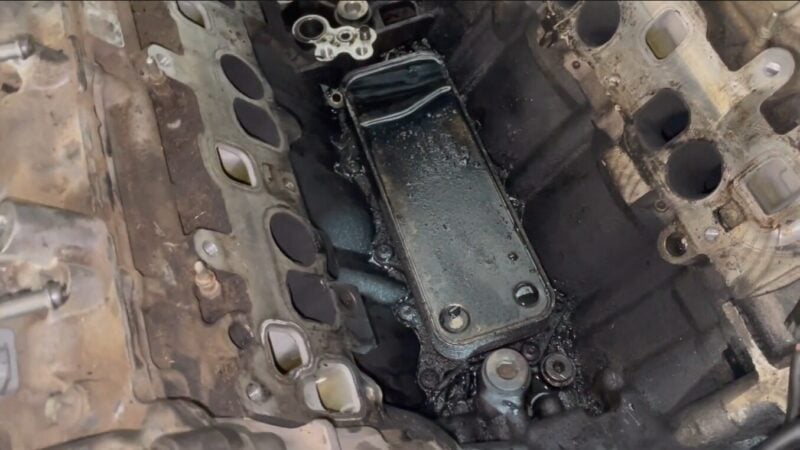
Figure 5: Oil cooler seal leak — oil pooling in OM642 V-bank valley after intake manifold removal
🔧 SHOP CASE STUDY: 2013 GL350 BlueTEC, 127K Miles
Customer complained of burning oil smell from HVAC vents for 3 months. No DTCs stored. Removed intake manifold—found 1/4 inch of oil pooled in valley. Seals rock-hard and cracked. Replaced seals ($45 parts), cleaned valley. 14.2 hours total. Customer had been quoted $3,800 at dealer.
- DIY: MBWorld Oil Cooler Seal Thread — Step-by-step with photos
- Parts: FCP Euro OM642 Kit — Lifetime warranty
2. Swirl Flap Motor Failure & Intake Carbon Buildup
Electrically-actuated swirl flaps create turbulence at low RPM. EGR carbon coats the runners and shafts, causing binding. The motor burns out trying to overcome resistance. Result: limp mode at ~3,000 RPM, rough idle, poor throttle response. This is a two-part problem—replacing the motor without cleaning the intake guarantees repeat failure within 20K–40K miles.
- DTCs: P2004 (runner open B1), P2005 (B2), P2006 (closed B1), P2007 (B2).
- Cost: Motor $150–250 | Intake clean $400–800 labor | Dealer $800–1,500.
- Scanner: Bidirectional swirl motor actuator test—command open/closed, verify position feedback.
- OEM P/N: A6421500494 (swirl motor actuator).

Figure 6: Carbon buildup on OM642 intake runners and swirl flap shafts — before cleaning

Figure 7: Clean intake manifold after walnut blasting — clear swirl flap movement
3. Injector Seal Failure (“Black Death”)
Each injector is sealed by a copper crush washer. When it degrades, combustion gases escape at 800°C+, carbonizing instantly into thick black deposits. If caught early: $5–15 washer. If ignored: injector extraction damage ($250–500 each), cylinder head bore damage, and accelerated DPF clogging from excess soot.
- DTCs: No specific DTC. Diagnose via IMA values per cylinder—deviation beyond ±1.5 mg/stroke = sealing issue.
- Cost: Parts $5–15/seal | Labor $150–300/injector | Dealer $300–500.
- Torque: Injector hold-down clamp: 8 Nm + 90° angle torque (NOT just 8 Nm).
- Scanner: IMA value readout per cylinder. Injector coding (IMA programming) after replacement.
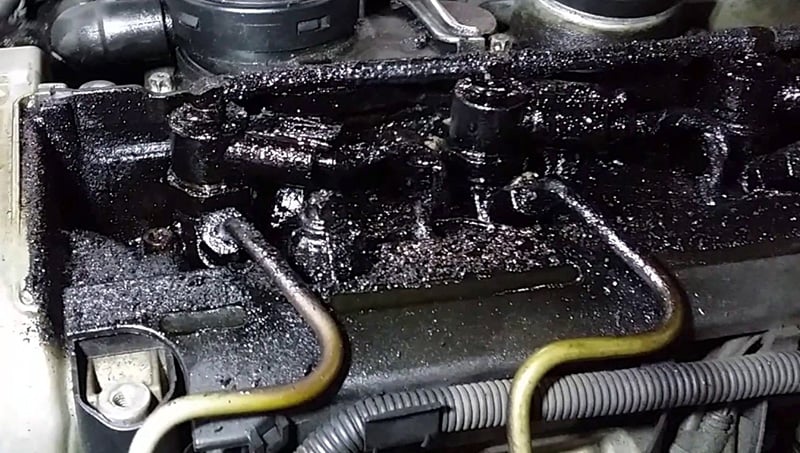
Figure 8: Black Death carbon buildup around OM642 fuel injector — close-up of typical crust pattern
🔧 SHOP CASE STUDY: 2011 Sprinter 3500, 156K Miles — Fleet Van
Black smoke under load, DPF regen every 2,000 mi instead of normal 300–400. No injector codes. IMA values: cylinder 4 at +4.2 mg/stroke (normal ±1.5). Visual confirmed carbon on cyl 4 injector. Replaced washer ($8), cleaned carbon, reprogrammed IMA. DPF interval normalized within 500 miles.
4. NOx Sensor Failure & SCR Faults (BlueTEC Only)
BlueTEC engines (2010+) use upstream/downstream NOx sensors ($350–500 each, 80K–120K mile lifespan). Failure triggers the infamous 10-start countdown—after which the engine is completely immobilized. Many owners clear codes with a generic scanner hoping the problem disappears; Mercedes logs this as potential tampering, complicating warranty and inspection situations.
- DTCs: P229F, P20EE, P2201, P2202, P2BAF.
- Cost: Parts $350–500/sensor | Labor $150–300 | Dealer $600–900.
- OEM P/N: A0009053603 (upstream), A0009056104 (downstream). Verify by VIN.
- CRITICAL: Do NOT clear SCR codes casually. Use scanner with proper SCR reset capability after repairs.

Figure 9: NOx sensor locations — upstream (pre-SCR) and downstream (post-SCR) on OM642 exhaust
5. DPF Clogging & Regeneration Issues
The DPF captures exhaust soot and burns it off during regen at ~600°C. Regen requires 20–30 min highway driving above 40 mph. City stop-and-go vehicles never achieve this, causing soot accumulation until the DPF light illuminates. At that point, forced regen with a scanner is required. If soot exceeds 45–55 grams, even forced regen may fail—requiring professional cleaning ($300–600) or replacement ($1,200–2,500+).
- DTCs: P2002 (efficiency), P2463 (soot accumulation), P246C (restriction).
- Cost: Forced regen $0 DIY (scanner) / $150–500 shop | DPF replace $1,200–2,500 + $400–800 labor.
- Scanner: Forced DPF regen (initiate+monitor), soot load %, differential pressure, EGT monitoring.

Figure 10: DPF location on Sprinter W906 undercarriage — differential pressure sensor connections
- YOUCANIC: DPF Regen Guide — Complete step-by-step procedure
6. Turbo Actuator Failure (VGT/VNT)
The electronic actuator controlling turbo vane position fails from heat cycling. Fixed-vane operation causes P0299 underboost or P0234 overboost. The critical diagnostic step: bidirectional actuator testing—command through full range, compare commanded vs. actual. Without this test, shops misdiagnose a $200–400 actuator as a $1,200–2,000+ turbo replacement.
- DTCs: P0234 (overboost), P0299 (underboost), P1497 (position sensor).
- Cost: Actuator $200–400 + $300–600 labor | Full turbo $1,200–2,000 + $800–1,500.
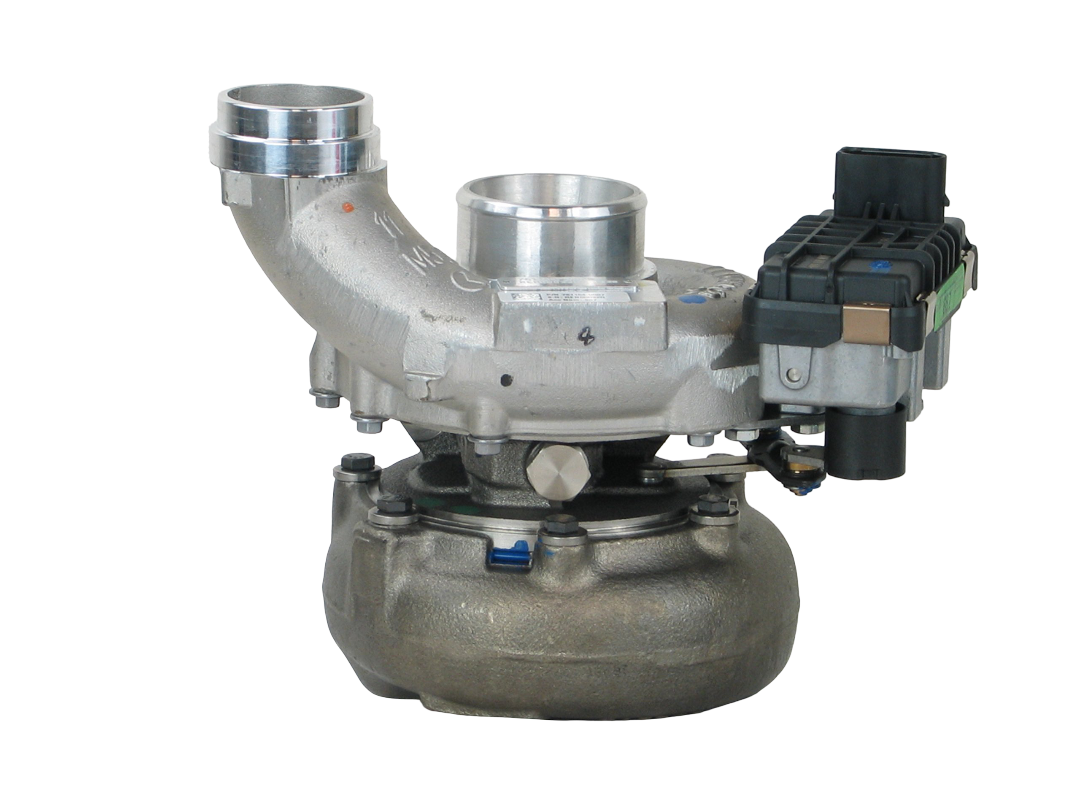

Figure 11: VGT turbo actuator — electronic connector and linkage arm to turbine housing
🔧 SHOP CASE STUDY: 2015 E350 BlueTEC, 98K Miles
Quoted $4,200 for full turbo at another shop (P0299). Bidirectional test: actuator responded to 85% range, stuck at last 15% from carbon binding. Removed actuator, cleaned vane ring. Total: $180 labor, zero parts. Customer saved $4,000.
7. EGR Valve & Cooler Failure
EGR routes exhaust back into intake to reduce NOx. The valve carbon-fouls (especially pre-BlueTEC with high EGR rates). More concerning: the EGR cooler can crack internally, allowing coolant into the exhaust—white smoke, dropping coolant level with no visible external leak.
- DTCs: P0401 (insufficient flow), P0402 (excessive), P049D (position exceeded limit).
- Cost: EGR valve $200–400 + $200–500 labor | Cooler $300–600 + $400–800.
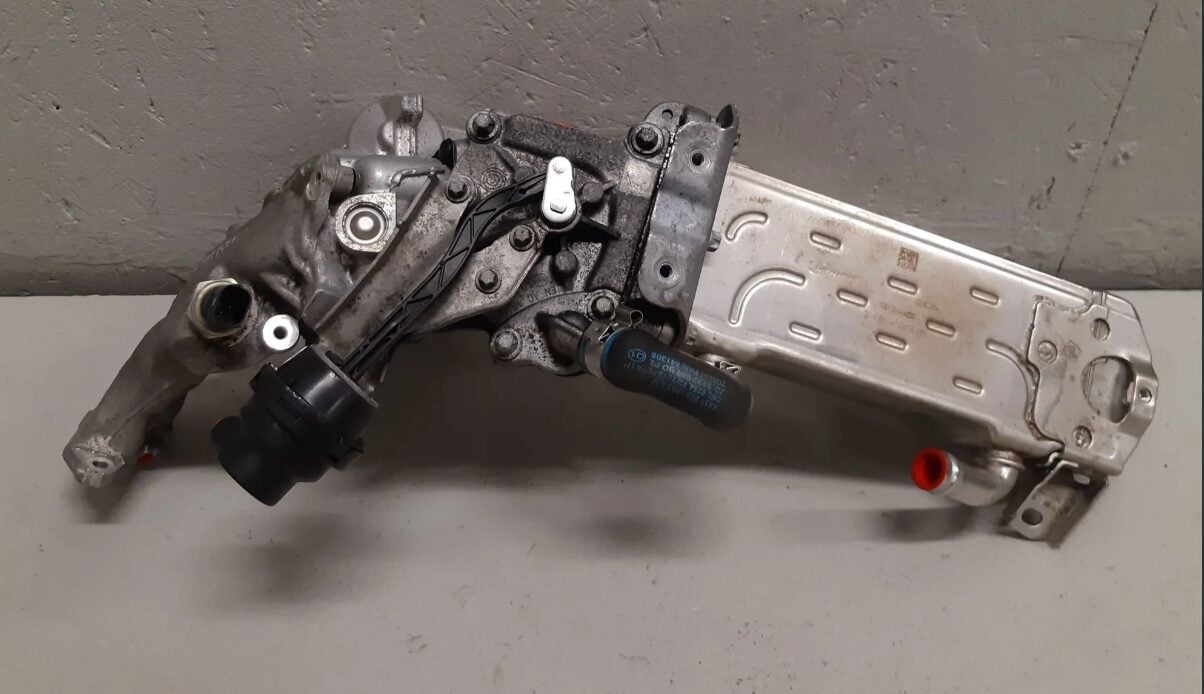
Figure 12: EGR valve and cooler assembly — common leak points and connection hoses
8. Glow Plug & Controller Failure
Glow plugs last 80K–120K miles but seize in the head from carbon deposits. Forced removal can snap the tip off inside the head—catastrophic scenario requiring head removal ($3,000+). Always use penetrating oil applied over several days, proper removal socket, and controlled torque.
- DTCs: P0380 (circuit), P0670 (controller), P0671–P0676 (cylinders 1–6).
- Cost: All 6 + controller $200–400 parts + $300–600 labor.
- Torque: Glow plugs: 15 Nm. Do NOT exceed—overtorque increases seizure risk.
- OEM P/N: A6429050000 (plug). A6429007701 (controller).
9. Crankshaft Main Bearing Wear (Pre-2010)
The most serious OM642 failure. Early engines (2005–2009) are vulnerable to premature 1st main bearing wear from inadequate oil supply to the thrust face. Symptoms: metallic ticking from front of engine at warm idle. No DTC—diagnose with stethoscope, oil analysis (elevated copper/lead), and scanner oil pressure PIDs at idle. Mercedes revised the bearing design ~2010.
Cost: Bearing shells in-car $100–200 + $600–1,200 labor | Engine replace $6,500–8,500 + $2,000–3,500.
10. Turbo Inlet Pipe & CCV O-Ring Leaks
The turbo inlet O-ring hardens and cracks, creating unmetered air leak downstream of MAF. ECU sees airflow mismatch causing reduced power and MAF codes. This $30–50 repair is frequently misdiagnosed as turbo failure. Scanner showing MAF deviation between banks or low boost vs. target reveals the leak.
Cost: Parts $30–60 | Labor $150–300 | DIY 1–2 hours.

Figure 13: Turbo inlet O-ring — old cracked vs. new replacement
- IDParts: Fixing #1 OM642 Problem — Photo guide with part numbers
Critical Torque Specifications & OEM Part Numbers
Correct torque prevents failures on aluminum head diesel engines. Part numbers are referenced. Verify against your VIN before ordering.
Torque Specifications
| Fastener | Torque | Notes |
| Oil drain plug (M14) | 25 Nm (18 lb-ft) | Replace crush washer every change |
| Oil filter housing cap | 25 Nm (18 lb-ft) | Plastic housing—hand-tight+snug |
| Oil cooler housing bolts | 15 Nm (11 lb-ft) | Aluminum—do not overtorque |
| Valley pan bolts | 10 Nm (7.5 lb-ft) | Multiple bolts; sequence matters |
| Injector hold-down clamp | 8 Nm + 90° | Angle torque critical for seal |
| Glow plugs | 15 Nm (11 lb-ft) | Anti-seize on threads |
| Intake manifold bolts | 8 Nm (6 lb-ft) | Torque center-out sequence |
| Turbo exhaust manifold nuts | 25 Nm (18 lb-ft) | Replace copper nuts each time |
| EGR valve mounting | 10 Nm (7.5 lb-ft) | Check gasket condition |
| Crankshaft pulley bolt | 150 Nm + 180° | Special holding tool required |
| Turbo oil feed banjo | 25 Nm (18 lb-ft) | Replace copper washers both sides |
Commonly Replaced OEM Part Numbers
| Component | MB OEM P/N | Notes/Aftermarket |
| Oil cooler seal kit | A6421800058 | FCP Euro OM642RRKIT (lifetime warranty) |
| Injector copper washer | A6420170060 | Replace at every injector service |
| Swirl motor actuator | A6421500494 | Verify LH/RH bank |
| NOx sensor (upstream) | A0009053603 | Multiple revisions—verify by VIN |
| NOx sensor (downstream) | A0009056104 | Multiple revisions—verify by VIN |
| Glow plug (each) | A6429050000 | Bosch Duraterm; verify variant |
| Glow plug controller | A6429007701 | Replace if circuit codes persist |
| DPF diff pressure sensor | A0061539528 | Common cause of false DPF codes |
| Turbo inlet O-ring | A0149975845 | IDParts sells as kit |
| Oil filter element | A6421840025 | Mahle OX 153/7D aftermarket |
| Fuel filter (Sprinter) | A6420920401 | Change every 20K miles |
| Engine oil (229.51) | A000989700613 | Mobil 1 ESP 5W-30 approved alt. |
Mileage-Based Preventive Maintenance Schedule
Based on real-world longevity data, not factory extended intervals. Following this is the difference between a 150K-mile engine and a 300K-mile engine.
| Interval | Service Items | DIY Cost | Shop Cost |
| 10K mi | Oil+filter (MB 229.51/229.52 ONLY). Reset service indicator. | $60–$90 | $150–$250 |
| 20K mi | + Fuel filter. Inspect serpentine belt. Check oil cooler weep. | $90–$130 | $250–$400 |
| 30K mi | + Air filter. Inspect turbo inlet/CCV O-rings. Full DTC scan. | $110–$160 | $300–$500 |
| 40K mi | + Brake fluid flush. Inspect injectors for Black Death. Test glow plugs. | $130–$200 | $350–$550 |
| 60K mi | + Trans fluid/filter (722.9). Inspect EGR. Test turbo actuator. Full scanner health report. | $250–$400 | $600–$900 |
| 80K mi | + CLEAN INTAKE MANIFOLD (walnut blast). Clean CCV pipes. Replace turbo inlet O-ring. #1 longevity service. | $300–$500 | $800–$1,200 |
| 100K mi | + REPLACE OIL COOLER SEALS proactively. Replace all 6 glow plugs. Coolant flush. Transfer case fluid. | $400–$600 | $2,000–$3,000 |
| 120K mi | Repeat 60K. Second intake clean. Replace degraded CCV hoses. Oil analysis for bearing metals. | $300–$500 | $800–$1,200 |
| 150K mi | Repeat 100K (minus seals if done). Check DPF soot. Consider NOx sensor replace if original. Chain tensioner check. | $400–$800 | $1,500–$2,500 |
| 200K mi | Full engine health: compression test, oil analysis, all sensor live data. Budget for potential DPF/NOx/turbo/injector work. | Varies | $500–$800 eval |
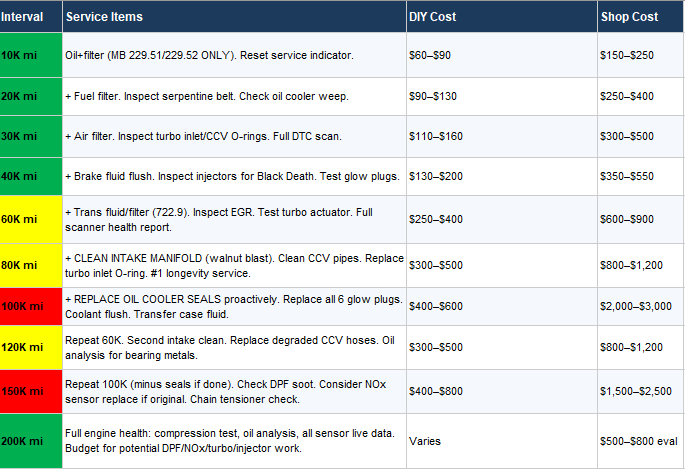
Figure 14: OM642 maintenance timeline infographic — key service intervals 10K–200K miles
Before You Buy: Used OM642 Pre-Purchase Inspection Checklist
This checklist can save you $5,000–$15,000. Many critical OM642 issues produce no warning lights and can only be detected through scanner live data analysis.
Phase 1: Visual Inspection (No Tools)
- Check oil cap underside for milky residue (coolant contamination).
- Look for black carbon crust around injectors (Black Death).
- Inspect under engine for fresh oil weeping from valley area.
- Check DEF/AdBlue level and clarity (should be clear, not yellow).
- Listen for metallic ticking at front of engine at warm idle (bearing wear).
- Check for white smoke at cold start vs. warm (EGR cooler vs. glow plug).
- Inspect exhaust tip for excessive soot (DPF bypassed or failed regen).
- Verify coolant level in expansion tank (dropping = internal leak).
Phase 2: Scanner Inspection (Bidirectional Scanner Required)
- Full-system DTC scan (ALL modules, not just engine). Check stored/pending/permanent codes.
- Read SCR/AdBlue start counter—if countdown active, walk away or negotiate hard.
- Check DPF soot load %. Above 70% = imminent regen or replacement.
- Read IMA (injector metering adjustment)—all cylinders within ±1.5 mg/stroke.
- Monitor oil pressure at idle (>1.0 bar warm). Low = bearing concern.
- Compare both MAF readings—significant bank deviation = intake leak.
- Test turbo actuator bidirectionally—full range, verify position matches.
- Check freeze frame data for stored codes—reveals conditions at fault.
- Verify battery registration date and state of health.
- Run forced DPF regen as test—if system refuses, underlying fault exists.
Phase 3: Maintenance History
- Request records. Confirm MB 229.51/229.52 oil at every change.
- Oil change frequency—anything beyond 12K miles = hard use.
- Oil cooler seals replaced? If not at 90K+, budget $1,500–2,500.
- Intake cleaned? If not at 80K+, budget $800–1,200.
- BlueTEC: NOx sensor history. Original at 100K+ = replacement imminent.
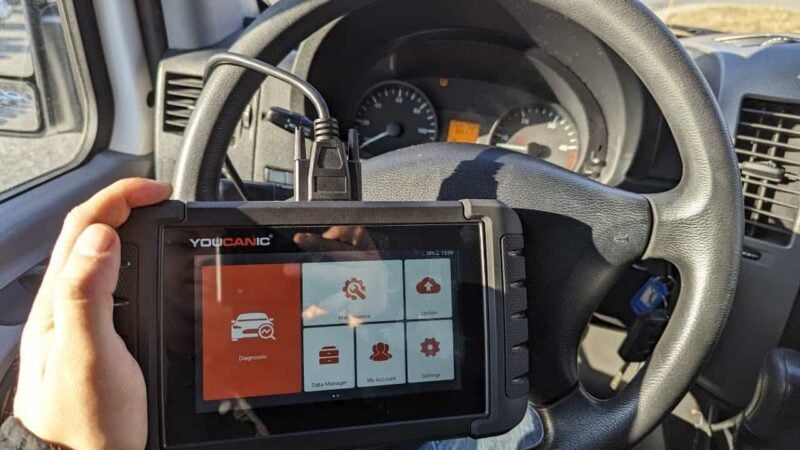
Figure 15: Pre-purchase scanner inspection — OBD2 scanner connected, showing DTC scan results
The 5 Best OBD2 Scanners for Mercedes OM642 Diesel
Diagnosing the OM642 requires full-system access, bidirectional control, forced DPF regen, injector coding, SCR reset, and ideally ECU adaptation.
1. Mercedes-Benz XENTRY — Dealer OEM Tool
Official dealer platform covering every MB system ever produced: GFF, SCN coding, ECU flashing, WIS integration, all service resets. Gold standard for MB-only shops needing SCN programming.
- Pros: 100% coverage, SCN coding, ECU flash, GFF flowcharts, WIS integration.
- Cons: $25K–30K+ over 4 years, $8K–16K/yr ongoing, 42-month lease, steep learning curve, MB-only.
2. YOUCANIC UCAN-II — Best Overall XENTRY Alternative
Full-system bidirectional diagnostics across all MB platforms including Sprinter/Freightliner/Metris. Covers DPF forced regen, SCR reset, injector coding, turbo actuator testing, battery registration, and 40+ service functions. 100+ vehicle brands, no subscription fees, lifetime updates.
- Key OM642 functions: Full-system scan, bidirectional actuator control, forced DPF regen, SCR reset, IMA coding, ECU adaptation, live data graphing, freeze frame.
- Pros: Full bidirectional MB, no subscription, 100+ brands, portable, AI diagnostic assist.
- Cons: No SCN online coding, no ECU flash.
3. iCarsoft MB V3.0 — Best Budget MB-Specific
$100–250 MB-specific scanner. Full-system diagnostics, 7–38 reset functions, 38-pin adapter for older models, lifetime updates. Limited bidirectional and no ECU coding. Best for DIY owners needing more than basic code reading.
4. Autel MaxiSys MS906BT — Professional Multi-Brand
Robust MB coverage alongside 80+ brands. Android tablet with Bluetooth VCI. Strong bidirectional and ECU coding but $999–1,999+/yr subscription, $1,500–3,500+ initial. MB-specific depth can lag dedicated tools.
5. ThinkCar / Kingbolen / OTOFIX — Value Contenders
ThinkCar Thinktool ($500–1,200): decent MB with bidirectional. Kingbolen (<$200): basic code reading only. OTOFIX (Autel sub-brand): accessible professional with subscription. Verify Sprinter compatibility before buying.
Scanner Comparison Summary
| Feature | XENTRY | UCAN-II | iCarsoft | Autel | ThinkCar+ |
| Full System | ✅ | ✅ | ✅ | ✅ | ✅ |
| Bidirectional | ✅ | ✅ | Limited | ✅ | Varies |
| DPF Regen | ✅ | ✅ | ✅ | ✅ | Varies |
| Injector Code | ✅ | ✅ | ✅ | ✅ | Limited |
| SCR Reset | ✅ | ✅ | Limited | ✅ | Limited |
| ECU Coding | ✅ | ✅ | ❌ | ✅ | Limited |
| SCN Prog. | ✅ | ❌ | ❌ | ❌ | ❌ |
| Multi-Brand | ❌ | ✅ 100+ | ❌ | ✅ 80+ | ✅ |
| Subscription | $4–16K/yr | FREE | FREE | $1–2K/yr | Varies |
| Sprinter | Full | Full | Good | Good | Varies |

Figure 16: YOUCANIC UCAN-II scanner connected to Sprinter showing DPF regen screen
Frequently Asked Questions
Is the OM642 reliable?
Yes, when properly maintained. How and what failed are well-documented and largely preventable. Many examples reach 200K–300K+ miles with correct oil (229.51/229.52), real-world service intervals, and regular scanner health checks.
How long does a Sprinter diesel engine last?
200K–300K miles commonly; fleet Sprinters documented exceeding 350K. Critical factors: correct oil spec, 10K-mile oil changes, highway driving for DPF regen, proactive oil cooler seals at 90–100K, intake cleaning every 60–80K.
Best OBD2 scanner for Mercedes/Sprinter?
The YOUCANIC UCAN-II for best balance of capability, cost, and ease of use. Full bidirectional, DPF regen, injector coding, SCR management, zero subscription. For SCN coding: XENTRY at $25K–30K+ over 4 years.
What does “No Restart in X Starts” mean?
- 10-start countdown triggered by SCR/AdBlue faults (usually NOx sensor). Vehicle completely immobilized after countdown=0. Do NOT clear codes casually—Mercedes logs it as potential tampering. Diagnose root cause, repair, then properly reset SCR with a capable scanner.
How to force DPF regen on Sprinter?
- Requires bidirectional scanner connected to OBD2 port. Scanner commands ECU to raise exhaust to ~600°C. Prerequisites: clear active faults, engine at operating temp, stationary, hood closed. Takes 20–45 minutes. See youcanic.com/do-mercedes-dpf-regeneration/.
What oil for the OM642?
- Only use MB 229.51 or 229.52 spec. Low-SAPS synthetic 5W-30 or 5W-40. Never use conventional or non-spec oil. Incorrect oil accelerates DPF loading and causes sludging. Approved oils are the Mobil 1 ESP 5W-30, Liqui Moly Top Tec 4200, and Shell Helix Ultra ECT 5W-30.
Can I use a generic OBD2 scanner?
- Generic scanners only read basic P0xxx codes. OM642 critical faults live in Mercedes-specific modules (SCR, DPF, SAM, transmission, instrument cluster) that generic scanners cannot access. You’ll miss the majority of diagnostic information.
Sprinter engine replacement cost?
- Reman long block $6,500–8,500 + $2,000–3,500 installation (15–20 hrs). Total dealer $10K–14K+. Makes early diagnosis critical—catching problems early saves $10K+.
What causes Black Death?
- Copper injector crush washer failure. Combustion gases escape at 800°C+, carbonizing around injector. Early catch: $5–15 washer. Ignored: $250–500/injector + DPF clogging acceleration.
Can I drive with DPF light on?
- Briefly yes, but don’t ignore it. Try 30+ min highway at 60+ mph for passive regen. If light persists, forced regen needed. Continued driving overloads DPF until it needs cleaning ($300–600) or replacement ($1,200–2,500+).
What is limp mode on Sprinter?
- ECU limits power/RPM/speed to prevent damage. Most common OM642 causes: swirl flap motor failure (~3,000 RPM limit), turbo actuator failure (boost limit), DPF overload, SCR faults. Requires full-system scan to identify trigger.
OM642 vs OM651 difference?
- OM642 is a 3.0L V6 (190–265 HP, 2005–2022) and the OM651 is a 2.1L I4 (95–204 HP, 2008–2020). OM642 in larger vehicles (E/ML/GL/Sprinter 3.0) while the OM651 is in smaller vehicles (C-Class, Sprinter 2.1). Both share DPF/SCR emissions. V6 layout makes oil cooler repair more complex.
DEF/AdBlue change frequency?
- DEF consumption ~2–3% of fuel. Typical Sprinter: 1 gallon per 300–500 miles. Tank (4–7 gal) refill every 5K–10K miles. Use ISO 22241 certified DEF only. Contaminated DEF causes SCR faults and 10-start countdown.
How to reset AdBlue warning?
Refill DEF tank and drive 10–20 min—warning should clear automatically. If persistent after refill, the underlying fault (NOx sensor or DEF quality) requires scanner diagnosis and proper SCR reset after repair.
Resources & Useful Links
YOUCANIC
- YOUCANIC.com — Mercedes repair guides, DTC lookups, DIY tutorials
- YOUCANIC Scanner Shop — UCAN-II scanner and accessories
- DPF Regen Guide — Step-by-step forced regen
Mercedes Forums
- MBWorld Diesel Forum — Largest MB community
- BenzWorld.org — OM642 reliability discussions
- PeachParts — Deep-dive oil cooler/turbo DIY
Sprinter Communities
- Sprinter-Source Forums — The go-to Sprinter community
- The Benz Tech — Specialist shop guide
Parts Suppliers
- FCP Euro OM642 Kit — Lifetime warranty
- IDParts.com — Diesel parts specialist
Technical References
- Wikipedia: OM642 — Full specs and history
- DieselHub — US-market specifications
- Diagnostic Network — No-start diagnostic flowchart
Scanner Sites
- YOUCANIC Shop — UCAN-II
- XENTRY Shop — Official XENTRY
- iCarsoft USA — Budget MB scanners
- Autel — MaxiSys platform
- Foxwell — NT510/NT710
Final Recommendation
The OM642 rewards proper maintenance with 200K–300K+ miles of service. The key is early diagnosis with the right scanner and the real-world maintenance schedule in this guide.
For most technicians, fleet operators, and enthusiasts, the YOUCANIC UCAN-II delivers 90–95% of XENTRY’s diagnostic power with zero subscription and 100+ brand coverage. For SCN coding and ECU flash, XENTRY remains the standard at $25K–30K+ over four years.
➤ Get the UCAN-II: shop.youcanic.com
➤ Repair Guides: youcanic.com
[ QR CODE — shop.youcanic.com ]
About the Author: Written by a certified Mercedes-Benz diesel specialist with 20+ years hands-on experience across all OM642 platforms. Recommendations based on real-world shop use.


