MB Medic Mercedes-Benz Repair Guides, Service, How To DIY

Last updated:
In this guide (5 sections)

 Are you trying to find the location of the O2 sensors in your Mercedes-Benz? Well, pictures are worth a thousand words, so here is one.
Look at the picture; it will show where the O2 sensors are located. The diagram identifies Bank 1 Sensor 1, Bank 1 Sensor 2, Bank 2 Sensor 1, and Bank 2 Sensor 2.

This photo shows an M112 3.2-liter V6 engine. Remember that this is the typical configuration for most Mercedes-Benz V6 and V8 engines, such as the M113, M119, M272, and M273.
Where to Buy OEM Oxygen Sensors
If you have the check engine light on, an oxygen sensor code does not prove the sensor has failed. Check the wiring, connector, exhaust leaks, heater circuit, live sensor data, fuel trims, and applicable software updates before replacing parts. You can get the O2 sensor online at a fraction of the price. Use a direct fit sensor matched to your VIN, engine, bank and sensor position. Universal splice in sensors are cheaper, but they do not always match the heater circuit and signal requirements, and a mismatch will set the same code you were trying to clear. We recommend original equipment sensors. Bosch typically makes the original O2 sensors. We have set up this Amazon search for original Mercedes-Benz O2 Bosch sensors.
Which sensor is which?
This is where most people order the wrong part. Bank refers to the side of the engine. Sensor refers to the position relative to the catalytic converter.
| Name | Engine side | Position | What it does |
|---|---|---|---|
| Bank 1 Sensor 1 | Right side (passenger side on left hand drive) | Before the catalytic converter | Controls fuel trim. A fault here affects how the engine runs. |
| Bank 1 Sensor 2 | Right side | After the catalytic converter | Monitors converter efficiency. Rarely affects drivability. |
| Bank 2 Sensor 1 | Left side (driver side on left hand drive) | Before the catalytic converter | Controls fuel trim for that bank. |
| Bank 2 Sensor 2 | Left side | After the catalytic converter | Monitors converter efficiency. |
What scanner can I use to troubleshoot the check engine light?
Before replacing an oxygen sensor, scan the engine control module and compare the fault code against live oxygen sensor voltage and fuel trim data. That comparison is what separates a failed sensor from an exhaust leak or a wiring fault.
The UCAN-II Pro reads every control module on the car, streams live sensor data and fuel trims, runs active tests, and performs service resets. No subscription and no AutoAuth required.
How it compares to Xentry
For oxygen sensor diagnosis there is no practical gap. Both read the engine module, both show live sensor data and fuel trims, and both run the relevant actuator tests. Xentry’s advantage is online VIN coding, which an oxygen sensor replacement does not require. The difference you will notice is the subscription and the dealer login that Xentry expects and the UCAN-II Pro does not.
Confirm the sensor before you replace it
Exhaust leaks, bad connectors and heater circuit faults all set oxygen sensor codes. Live data tells you which one you actually have.
Oxygen sensor fault codes
Match the code to the sensor position before ordering anything.
| Fault | B1 S1 Right, upstream |
B1 S2 Right, downstream |
B2 S1 Left, upstream |
B2 S2 Left, downstream |
|---|---|---|---|---|
| Circuit malfunction | P0130 | P0136 | P0150 | P0156 |
| Circuit low voltage | P0131 | P0137 | P0151 | P0157 |
| Circuit high voltage | P0132 | P0138 | P0152 | P0158 |
| Slow response | P0133 | P0139 | P0153 | P0159 |
| No activity detected | P0134 | P0140 | P0154 | P0160 |
| Heater circuit malfunction | P0135 | P0141 | P0155 | P0161 |
How to Replace an Oxygen Sensor
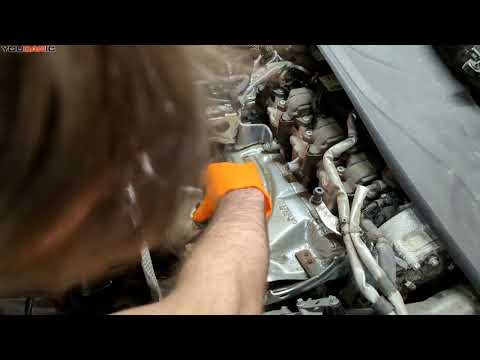
Downstream sensors are often easier to reach than upstream sensors, but access varies by chassis and engine. Let the exhaust cool completely. Raise the vehicle only at approved lift points, support it with rated jack stands or a lift, chock the wheels, and never work underneath a vehicle supported only by a jack. Upstream sensors are often harder to reach because space is limited. Here are a few videos that can help you.
Before you buy parts, scan every control module, not just the engine. It shows the root fault behind the warning lights and tells you whether the problem is still active. See how to do a full health check.
We sell the UCAN-II Pro. The function comparisons above come from each manufacturer’s own documentation so you can check them yourself.