 MB Medic Mercedes-Benz Repair Guides, Service, How To DIY

Last updated:
In this guide (5 sections)
 The hot summer days are here, and you realize that the air conditioner on your Mercedes-Benz is no longer blowing cold air. A/C problems can be complicated but they also can be something as simple as the system being low on freon. This is usually one of the most common problems. The solution is simple: your air conditioning system may need recharging. In many cases, you can add R134a refrigerant and your system is back to working normally again. In this step-by-step guide, we will show you how to recharge the A/C system using an R134a recharging kit. This method is used to top off an A/C system that has been working fine for 5 or 6 years. Topping off a system that is over 5 years old is normal as long as there are no major leaks or defective components.
Which R134a Recharge Kit to Buy
There are so many recharge kits on the market that makes it is difficult to choose which is the best R134a refrigerant. It is important to understand that all R134a is basically the same, what is important is what else has been added to the R134a. A few things are more important than “Super ice cold, sub zero” labels.
What to look for when choosing an R134a recharging kit. Look at the can and you will see some of the following labels or none of them if it is just simply R134a with no additives.
What the additives in a recharge kit do
Recharge kits differ in what is mixed into the refrigerant. The common additions are:
- Oil is mixed to help with the lubrication
- A leak sealer to help prevent small leaks
- A/C dye to help a mechanic easily find leaks
- Reusable dispenser and gauge
- Adjustable temperature gauge that can help you fill the a/c properly.
Which one you want depends on your situation. If the system lost its charge slowly over a few seasons, a kit with dye is worth having: the dye shows up under a UV light later and lets you or a shop find the leak. Be careful with leak sealer. It can block the expansion valve and the receiver drier, and it contaminates the recovery machine a shop connects later, so many shops refuse to work on a system that has had sealer in it. If a proper repair is ever likely, stay away from it. Pure R134a, or refrigerant with only oil added, is the safest choice for the Mercedes-Benz climate control system.
Recommended R134a A/C Refrigerant Kits
There are no best A/C refrigerant kits, as that depends on your needs as described above. With that said, here are a few kits that will do the job. The links go to Amazon so you can read reviews and check current prices.
 |
A/C PRO ACP-100 Professional Formula R-134a Ultra Synthetic Air Conditioning Refrigerant
|
 |
Interdynamics MAC-134 EZ Chill Refrigerant Refill
|
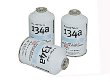 |
3 Cans R-134a DuPont Suva A/C Automotive Refrigerant/Freon R134a
|
Of course, you can choose any kit that you prefer. Now let’s move on to how to charge your AC system.
How to Charge the A/C in Your Mercedes-Benz
This video shows how to recharge the air conditioner on your Mercedes-Benz. Charging the system with a refrigerant charging kit can take between 5 and 10 minutes, depending on the system’s capacity.
Before we begin, remember: These instructions may vary depending on the AC recharge kit that you are using. Be sure to always read the instruction notes on your recharging kit. The gauge that you will see in our video is similar to the gauge found on the A/C PRO ACP-100 kit listed above.
Safety first. Refrigerant leaving a fitting is cold enough to freeze skin and can cause permanent eye damage, so wear safety glasses and gloves and keep your face clear of the coupler when you connect and disconnect. The hose on a recharge kit fits the low pressure port only; if it does not click on, you have the wrong port, and the high pressure side must never be charged from a can. The engine is running throughout, so keep hands, hose and gauge away from the belt and the cooling fan. Never vent refrigerant to the atmosphere; deliberately releasing R134a is illegal in the United States.
- Turn the engine on and let it idle. Then, turn the air conditioner on and set it to the maximum cooling setting.
- Open the hood of your VEHICLE and locate the low-pressure AC service port and remove the cap.

- Attach the refrigerant gauge to the service port. You will need to press and hold the quick-release at the end of the hose, insert it into the AC charging port then release it.
- Rotate the dial on the lens until the red arrow in the middle of the V is pointing to the temperature corresponding with the outside temperature. If the pressure is below the range of the V and the air climate control is blowing hot air that means the system is low on refrigerant and you can proceed with charging the system.
- Read the pressure in your air conditioner system. If the pressure is low the gauge reading will be in the white zone. If the pressure is normal then the gauge should be in the green zone. You should not have a reading on the HIGH / RED zone except when the car is turned off, in which case it is normal.
- Always keep the can UPRIGHT. As you charge the system shake the can slightly every two or three seconds, while you are charging.
- Every 30 seconds release the trigger to stop the charging process and read the pressure. Be careful to not overcharge the system. On our gauge overcharging was marked in red. Note that the system may show overcharged with the engine turned off and that is normal.
- Stop recharging the system when the pressure gauge shows within range.
- Detach the connector from the low-pressure AC port. Reinstall the cap, close the hood, and enjoy your A/C system again.
Important Notes
- DO NOT TURN THE CAN UPSIDE DOWN WHILE CHARGING. Only gas should go into the AC system, by turning the can upside down the AC system will get liquid refrigerant which can cause the AC compressor to lock up and also wash out the oil. Keep the AC refrigerant can in the up position and only shake it slightly while charging.
- If the refrigerant level is very low, the AC compressor will not engage, because the low pressure switch holds it off to protect it. If the pressure comes back into range and the compressor still does not engage, read our guide to diagnosing A/C compressor clutch problems before adding anything else. Charge the AC system for a couple of minutes with the engine running, and you should notice the AC compressor engages/kick in once you add enough refrigerant into the system.
- Once the A/C kicks in and the air conditioning system starts to work the pressure on the system may drop. Continue to add freon until the system shows pressure on the correct range correlating to the outside temperature.
Troubleshooting and Frequently Asked Questions
What if your Mercedes-Benz A/C does not work after a recharge?
If you used a recharge kit to top off your A/C system, but the air conditioner still doesn’t blow cold air, then it may be time to take your car into an auto repair shop for an A/C diagnosis. A professional needs to perform a dye test and check the system for leaks.
Mercedes-Benz Air Conditioning Service Cost
A Mercedes-Benz specialized shop may charge $100 to $150 to diagnose your A/C system.
Important factors to keep in mind when charging the A/C system are:
- Ensure the system is sealed and not leaking.
- Ensure the system does not have any moisture or air in it. An A/C vacuum pump is needed to achieve this.
- Ensure the compressor is operating correctly. Including the serpentine belt. Make sure the cooling fans work.
- Clean out the condenser by the radiator! Dirt and leaves can build up in there over the years. Take a garden hose and clean it.
- Add the correct refrigerant amount. Do not guess! A label under the hood tells you how much the system holds. That figure is the charge by weight for a full evacuate and recharge; a top off from a can cannot measure weight, which is why this method charges to the gauge pressure for the outside temperature and stops as soon as the needle reaches the range.
- Do not introduce liquid R-134a into the system. Only gas should enter via the A/C low-pressure charging port.
AC Light Flashing on my Mercedes-Benz
If the A/C light on the climate control is flashing, the climate control unit has stored a fault. On most Mercedes-Benz models that module is not something a basic OBD2 code reader can see; the last section of this article covers how to read it, and our Mercedes A/C diagnostics guide lists the climate control trouble codes and how to reset them.
The gauge is in the red zone as soon as you attach it
This may happen because the engine is off or the A/C compressor disengages.
The gauge shows zero
This means the system is empty, and an empty system has had air and moisture in it. Do not start charging: a can into an empty system will not last, and the moisture damages the compressor and the receiver drier. The leak has to be found and fixed, then the system evacuated with a vacuum pump and charged by weight.
When did Mercedes-Benz switch to R-134a refrigerant?
Mercedes-Benz switched to R-134a in the early 1990s. Look under the hood to see what refrigerant your air conditioner system uses. If you have an older Mercedes-Benz, it may still be on R-12. In the United States, R-12 is sold only to EPA Section 609 certified technicians, so for a do it yourself owner the practical route is to have a shop retrofit the system to R-134a.
My gauge has no outside temperature scale. How do I know when to stop?
R-134a System pressure chart.

Where is the A/C low pressure port on a Mercedes-Benz?
There are a couple of tools online that could help you locate the A/C low-pressure charging port on your Mercedes-Benz
If you drive an S-Class, our W220 A/C recharge guide covers the port location and the charging steps for that car.


When the Gauge Reads Right and the Air Is Still Warm
A can and a gauge tell you one thing: the low side pressure. If that pressure is in range for the outside temperature and the vents still blow warm, or the A/C light keeps flashing, the fault is somewhere the gauge cannot see, and the climate control module has stored a code for it. On most Mercedes-Benz models a basic OBD2 code reader stops at the engine and never shows that module. A scanner that reads every control unit in the car, such as the UCAN-II Pro, reads the climate control module, so you can see the stored fault and the live data behind it and know whether you have a refrigerant problem, an electrical one or a module that needs attention before you spend money on another can or on a shop diagnosis.
Before you buy parts, scan every control module, not just the engine. It shows the root fault behind the warning lights and tells you whether the problem is still active. See how to do a full health check.


Thanks for your advice and helping me keep enjoying my old SL
Nearest M-B shop is hours away and word is that they are not very proficient but do know how to charge.