 MB Medic Mercedes-Benz Repair Guides, Service, How To DIY
This guide provides instructions on replacing the rear brake pads on a Mercedes-Benz W209 CLK350 2006-2009.
These instructions apply to the following Mercedes-Benz W209 CLK models.
- 209.456 Mercedes-Benz CLK350 2006-2008 w/ Sport Package
- 209.356 Mercedes-Benz CLK350 2006-2008 w/ Sport Package
- 209.456 Mercedes-Benz CLK350 2009
- 209.356 Mercedes-Benz CLK350 2009
Tools Required
 |
Jack Stands – Best Selling Jack Stands List |
 |
Hammer. Yes, you will need one. |
 |
Pin Remover Removal Extractor Tool |
Parts Required
- W209 Rear Brake pads. Ceramic Recommended 003 420 27 20 0034202720
- W209 Rear Brake Pad Wear sensors.
- Brake pad anti-squeal grease.
- Rotors (if you plan on replacing them).
How to change/replace rear brake pads on your CLK350 W209
- Set the emergency brakes. Jack up the car using your jack. Place jack stands under the car to secure it.

- Open the hood and remove the cap from the brake fluid reservoir. This will allow the brake fluid to return to the reservoir when you press the pistons into the brake caliper. Note the location on the right top corner marked with “Brake Fluid”.

Location of power steering fluid, coolant, brake fluid, and windshield washer. - Remove the rear wheels from your Mercedes-Benz CLK 350 W209.

- Remove the brake pad wear sensor from the right brake pad.

- Use a hammer to remove the pin that holds the brake pads. As you extract the retaining pin, be careful not to hit the brake heat shield. If you hit the shield, you may bend it and cause it to make noise when you drive.
- Use a screwdriver to press the brake cylinder into the caliper.
- Remove the old brake pads and clean the area where the brake pads make contact with the caliper.
- Install the new brake pads. Apply brake grease on the area where the brake makes contact with the caliper. Install the retaining pin. Make sure to align the brake pads and install the pin by hammering it in.
- Install the wheel and lower the car. Make sure to tighten the brake fluid reservoir cap.


Has the ABS light come on in the dashboard of your Mercedes-Benz?
Use a YOUCANIC full system diagnostic scanner to diagnose and fix your car like a pro! This advanced diagnostic tool can read and interpret the fault codes stored in your car’s computer system, providing detailed information about any problems with the engine, transmission, brakes, or other critical systems.
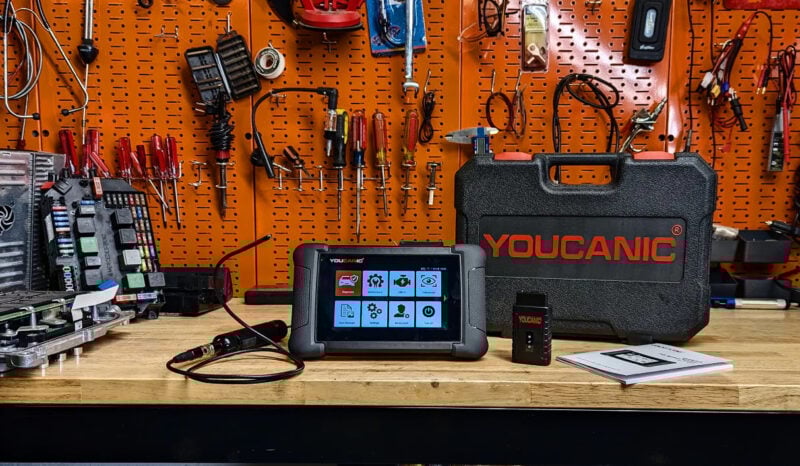
The YOUCANIC scanner can also perform diagnostic tests on various systems, including the ABS, airbag, and steering systems, to help pinpoint the root cause of any issues. With this information, you can make more informed decisions about repairs and maintenance, saving time and money on costly repairs.

